

010 447 2445Contact
Arke Technologies home
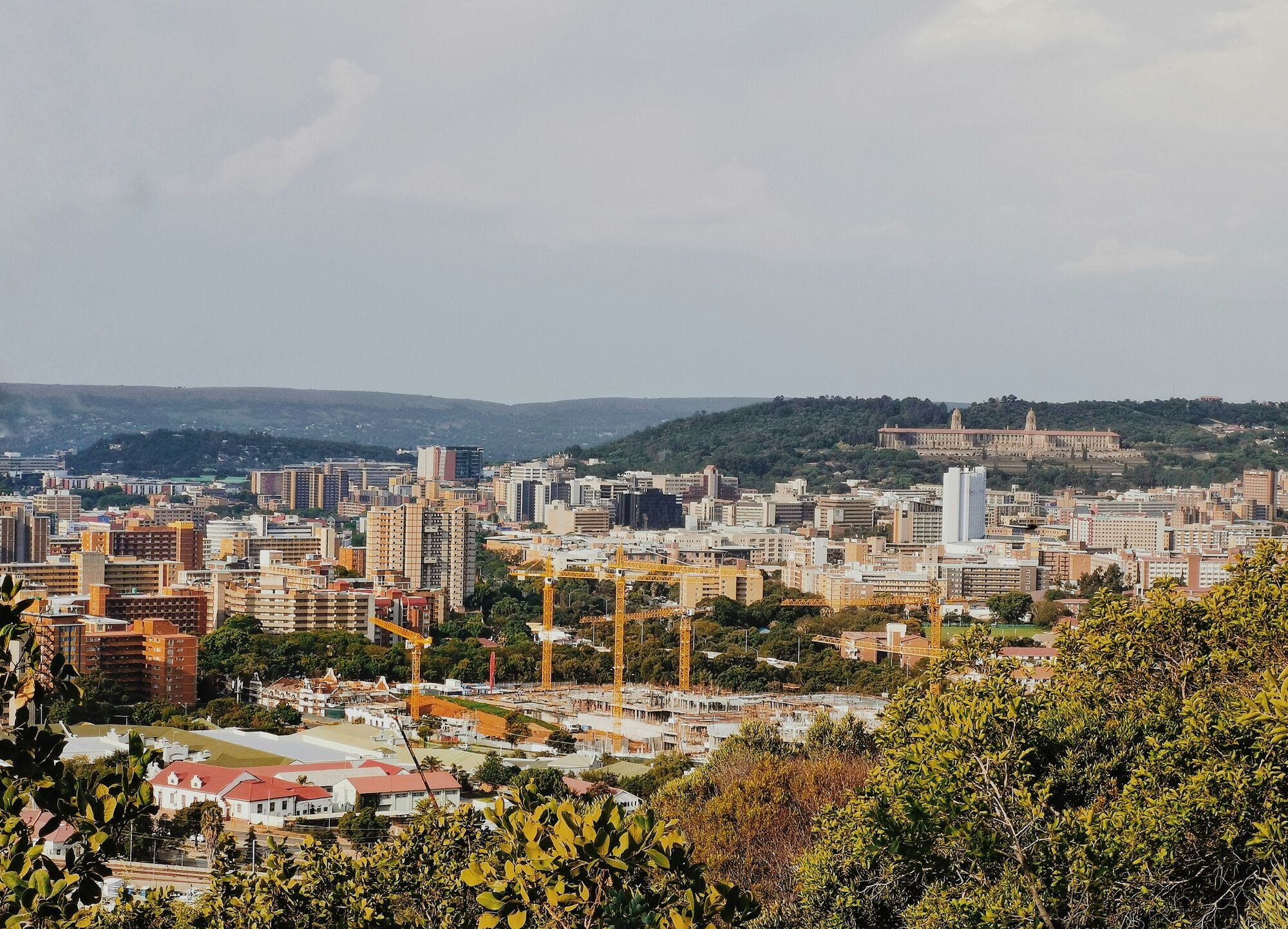
Pretoria's city centre and the Union Buildings on the ridge beyond.

Smart cities in South Africa: the Lanseria smart city and what municipalities can build now

A smart city uses networks, sensors and data to run services better for the people who live there. South Africa's flagship plan, the Lanseria smart city, is still largely at the planning stage in 2026. This guide, from Arke Technologies in Johannesburg, covers its progress, other projects and what municipalities can build now.

Insights

Smart cities in South Africa: the Lanseria smart city and what municipalities can build now

Last reviewed: September 2026, 17 min read

A smart city uses networks, sensors and data to run services better for the people who live there. South Africa's flagship plan, the Lanseria smart city, is still largely at the planning stage in 2026. This guide, from Arke Technologies in Johannesburg, covers its progress, other projects and what municipalities can build now.

What is a smart city?

Last reviewed: September 2026.

A smart city is a city that uses digital networks, connected sensors and data to plan and run its services, infrastructure and engagement with residents more efficiently, fairly and sustainably. That smart city definition matters less than its test: do residents get water, power, safety and services more reliably because of it? The smart city meaning for a municipality is practical: fewer leaks, faster repairs, accurate bills and shorter queues.

A smart city, explained in five layers: connectivity (fibre, Wi-Fi, mobile and low-power networks); sensors and devices, the internet of things; a data platform; applications and dashboards for staff and residents; and people and governance. The last layer is the one most plans neglect. People make a smart city: residents who report problems and use digital services, and officials with the skills and authority to act on what the data shows.

Why smart city investment, when budgets are tight? Because the returns sit in services and revenue that municipalities already struggle with. National non-revenue water, water lost to leaks, faulty meters or billing gaps, reached 47.4% in 2023 (Department of Water and Sanitation, No Drop report, 2023). This guide, part of our insights and guides, looks at South Africa's smart city plans and the smart city requirements that make them work.

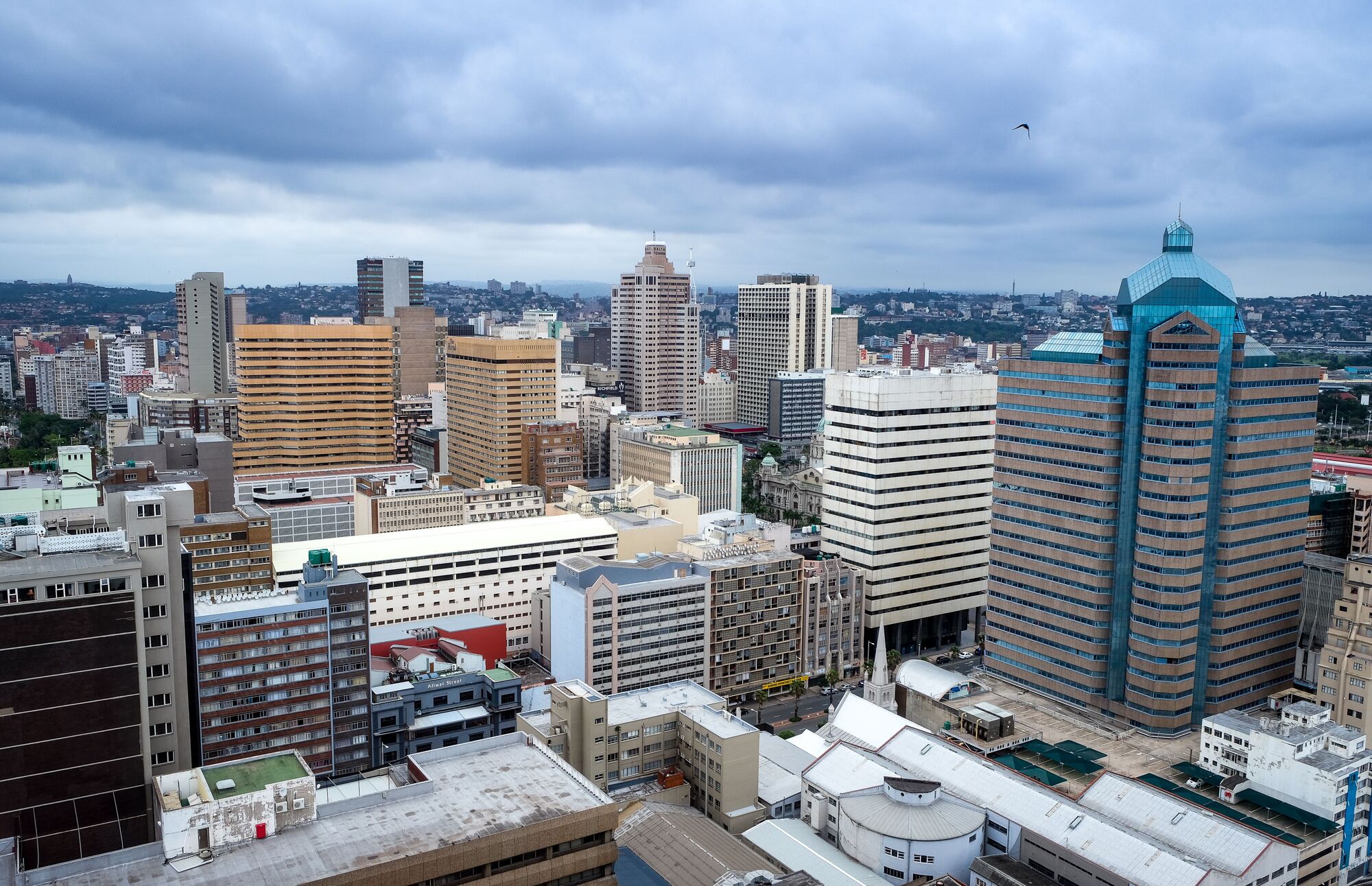
Office towers in a South African city centre under a cloudy sky.

Lanseria smart city: the plan, the master plan and progress

The Lanseria smart city is South Africa's best-known smart city project: a new city planned around Lanseria International Airport, north-west of Johannesburg. This is how it has moved, with the source for each step:

  • June 2019

    In his State of the Nation Address (SONA), President Cyril Ramaphosa asks whether the time has come to build a new smart city founded on the technologies of the fourth industrial revolution (State of the Nation Address, June 2019).
  • February 2020

    The SONA names Lanseria as the site of the first new city of the democratic era, for 350,000 to 500,000 residents within a decade, which is why it is often called Ramaphosa's smart city (State of the Nation Address, February 2020).
  • 2020 to 2021

    The Gauteng Office of the Premier leads the Greater Lanseria Master Plan, an integrated infrastructure and transport plan for water, sanitation, electricity, solid waste, roads, stormwater and ICT, guided by four principles: a transformative city structure, re-industrialisation, adaptability and resilience, and modernisation (SMEC). Johannesburg's council endorses it on 25 March 2021; the area spans Johannesburg, Mogale City, Tshwane and Madibeng in North West (City of Johannesburg, March 2021).
  • October 2024

    Ground is broken on a R320 million water treatment plant designed to produce two megalitres a day (IOL Business Report, October 2024).
  • April 2025

    A summit hosted by the Gauteng Growth and Development Agency names unclear roles, funding gaps and weak coordination between the municipalities and the province as obstacles, and Mogale City starts a precinct plan due in 2026 (Krugersdorp News, April 2025).
  • January 2026

    A site visit finds little visible construction beyond streetlights and a partial fence, with the project described as being in a pre-designation phase (MyBroadband, January 2026).
  • 2026

    Mogale City's draft precinct plan treats shared ducts, fibre and 5G readiness as one digital backbone for the area, and includes a proposed Gautrain station east of the airport (MyBroadband, 2026).

Lanseria smart city progress shows what slows a greenfield city: bulk water and sewer capacity, land and funding agreements, and coordination across four municipalities in two provinces. The Lanseria smart city project also carries the most useful lesson for every other municipality. Its master plan and precinct plan treat ducts, fibre and a shared digital backbone as essential services, planned with roads and water rather than left to each developer. Any municipality can adopt that rule today.

Other smart city projects in South Africa

Is there a new smart city in South Africa besides Lanseria? Several, mostly led by private developers with provincial and municipal backing. These are the smart city projects South Africa searches for most:

ProjectWhereWhat is plannedStatus and source
Mooikloof smart city, with Greenkloof as its first developmentPretoria East, City of TshwaneR84 billion; about 50,000 homes, 16,000 in the first phase; energy- and water-efficient designOne of Tshwane's 17 strategic urban developments; bulk water and sewer lines complete, a new reservoir awaiting commissioning (Rekord, July 2026)
Leratong smart cityMogale City, West RandR5 billion; about 15,000 homes, schools, a private hospital, transport nodes and government servicesA 42,000 m² shopping centre due to open on 29 October 2026; a five-megalitre reservoir completed in 2024 (Krugersdorp News, December 2025)
Nkuna smart cityVhembe District, LimpopoR6 billion; housing, shops, schools, a private hospital, hotels and industryMemorandum signed with the Vhembe District and Collins Chabane municipalities on 4 March 2025, after an earlier R50 million national grant (Limpopo Mirror, March 2025)
Lanseria smart cityJohannesburg, Mogale City, Tshwane and MadibengA new city for 350,000 to 500,000 residentsLargely at the planning stage; a water treatment plant broke ground in October 2024 (see above)

Mooikloof, Leratong and Nkuna are property developments first; what makes them smart in practice is efficient design and the chance to lay fibre, metering and monitoring before residents arrive. Greenkloof, the first development at Mooikloof, is built to EDGE Advanced standards for energy and water efficiency (Rekord, July 2026), and the Nkuna smart city project is a rarer thing: a smart city in Limpopo planned in a rural district rather than on a metro's edge.

The metros have taken different routes:

  • Smart city Johannesburg. Johannesburg's Integrated Intelligent Operations Centre, approved in 2015 at a cost of R71 million, brought several CCTV networks into one centre, with plans to add wider municipal data, and facial recognition was piloted there, raising privacy questions under POPIA (SAIIA, March 2021).
  • Cape Town smart city. Cape Town's Digital City Strategy rests on four pillars (digital infrastructure, digital government, the digital economy and digital inclusion), backed by a city-owned fibre network and free public Wi-Fi zones, many of them at libraries (Accelerate Cape Town).
  • Smart city Pretoria. The City of Tshwane launched free public Wi-Fi in November 2013 as part of its plan to become a smart city. The mayor later reported that the Auditor-General had found the project irregular, a reminder that smart city projects stand or fall on procurement discipline (News24, November 2013 and December 2016).

Smart city examples from around the world

Which is the best smart city in the world? On the IMD Smart City Index 2026, which surveys residents in 148 cities, Zurich ranks first, Oslo second and Geneva third (IMD, 2026). The smart cities in the world with the most to teach South African municipalities are not always the highest-ranked:

  • Stockholm, Sweden: dig once

    The city-owned company Stokab has laid dark fibre since 1994, digging each street once and leasing fibre to every operator on equal terms (City of Stockholm). For anyone researching smart city Sweden, it is the place to start, and the model behind the dig-once idea.

  • India: a national programme

    India's Smart Cities Mission, launched in June 2015 for 100 cities, Srinagar among them, closed on 31 March 2025 with 18 cities having completed all their projects (Down To Earth, 2025): funding and deadlines alone do not deliver.

  • Los Angeles: an event deadline

    SmartLA 2028, the LA smart city project timed for the 2028 Olympic and Paralympic Games, was first published in 2020 and updated in 2026, with plans from connectivity to one payment across rail, buses and bikes (City of Los Angeles, 2026). Other smart city transportation examples include traffic signals that report faults, real-time bus tracking and cashless fares.

  • Mauritius: an investment scheme

    Smart city Mauritius is a policy choice: since 2015, a Smart City Scheme under the Investment Promotion Act, run by the Economic Development Board, has approved more than a dozen developments (Economic Development Board Mauritius), showing how an African government can steer smart development with investment incentives.

  • Cautionary tales

    Saudi Arabia scaled back The Line, the 170-kilometre linear city planned at NEOM (Euronews, January 2026), and Belmont, a smart city planned in Arizona since 2017 by an investment firm linked to Bill Gates, has no published date for its first residents. The lesson matches Lanseria's: most of the value lies in making existing cities work better.

Future cities will be judged less on skylines than on services. For further reading, the open-access journal Smart Cities, published by MDPI, and IMD's Smart City Observatory publish research and rankings regularly.

Smart city technologies: IoT, sensors, 5G and more

What are smart city technologies? The internet of things (IoT) is at the core: sensors and connected devices that report conditions as they change. Internet of things smart cities work when a reading changes a decision, such as a pressure alarm that sends a repair crew. These are the main smart city technologies, and where a municipality would use them:

TechnologyWhat it doesMunicipal use
IoT sensorsMeasure flow, pressure, level, air quality, noise and occupancyWater leak and pressure monitoring, reservoir levels, streetlight faults, smart parking
Smart metersRecord water and electricity use remotelyAccurate bills, tamper and loss detection, prepaid management
Low-power networks (LoRaWAN, NB-IoT)Carry small sensor readings over long distances on little powerCity-wide sensors without mains power
Fibre backbone and Wi-FiHigh-capacity links between buildings, cameras and public spacesMunicipal offices, libraries, clinics and CCTV
5GFast, low-latency mobile dataVideo, mobility and dense device use, where operators provide it
CCTV and video analyticsWatch public spaces and trafficSafety and traffic management, subject to POPIA
Data platform and dashboardCombine data from many systemsAn operations centre and service-delivery reporting
Citizen appsLet residents report problems and payFault logging, meter readings and account payments
BlockchainShared, tamper-evident recordsNiche uses such as registries; rarely the first priority

Smart city IoT succeeds or fails on three practical choices: sensors for smart city use that survive local conditions and load-shedding, networks that reach them, and a team that responds to alerts. Smart cities and 5G go together where video and many devices crowd a small area, but most sensors send small readings and need low-power networks rather than 5G. Blockchain for smart cities suits the rare cases where several organisations must share one tamper-evident record; for most municipal records, a well-governed database with an audit trail does the job at lower cost.

Smart city water is where the case is clearest, given national water losses: district metering, pressure management, reservoir level sensors and leak detection. Smart city mobility covers traffic signals, bus tracking and cashless fares, while smart city living, for residents, means fewer outages, faster repairs and services on a phone. Several municipalities already offer a smart city app for residents: George Municipality's, launched on 1 June 2023, lets residents log faults, receive alerts and pay their accounts (George Municipality, June 2023). A smart city application only helps when every report lands in a work-order system that someone is measured on.

What municipalities can build now

These ideas for smart city services fit an MFMA budget and a three-year plan, in the order most municipalities should consider them:

  1. A secure network

    Fibre between municipal buildings, managed Wi-Fi in libraries and customer centres, firewalls and monitoring, and a dig-once rule so that ducts go in whenever a road is opened. See network infrastructure.

  2. Metering and measurement

    Smart water and electricity meters, bulk meters at zone boundaries, and pressure and reservoir sensors.

  3. Revenue reconciliation

    Match billing, metering and property-valuation records and report the exceptions every month, so better data becomes revenue; see municipal revenue enhancement. Mooikloof shows the stakes: a High Court ruling confirmed Tshwane's exclusive right to distribute electricity there, and the metro projects that this could bring in up to R125 million a month once the development is complete (Rekord, July 2026).

  4. Fault reporting linked to work orders

    A resident's report creates a job automatically, and its status is visible to the resident.

  5. An operations dashboard

    One smart city dashboard of outages, open faults, water losses and performance against service standards, for the municipal manager, the council and the audit committee.

  6. Security and privacy by design

    A privacy impact assessment before cameras, apps or meters collect personal information, POPIA compliance, and cybersecurity for every connected system; see cybersecurity for government and municipalities.

  7. Open data

    Publish non-personal data sets so that residents, researchers and businesses can use them.

Each can start in one ward, zone or service and grow once it proves its value.

How to make a smart city project work: governance, procurement and funding

Making a smart city project succeed is mostly a governance question. The G20 Global Smart Cities Alliance, for which the World Economic Forum acts as secretariat, built its policy roadmap on five foundational policies: privacy impact assessment, ICT accessibility, accountability for cyber security, dig-once digital infrastructure and open data. When the WEF smart cities benchmark reviewed the alliance's pioneer cities, fewer than a quarter carried out privacy impact assessments when deploying new technology (World Economic Forum, 2021).

  • Plan and budget first. Put the project in the IDP, the budget and the SDBIP before procurement, and use the MFMA section 33 process for contracts beyond three years; see PFMA, MFMA and ICT procurement.
  • Buy within the rules. Use the supply chain thresholds, and keep variations within the limits in MFMA Circular 62.
  • Own the data. Contracts should give the municipality its data, credentials and documentation, open standards and a clear exit.
  • Assess privacy and security. POPIA applies to cameras, apps and meters that identify people.
  • Resource the operations. Decide who monitors the sensors, repairs them and acts on alerts; a dashboard nobody watches is fruitless and wasteful expenditure in waiting.
  • Measure the benefits. Water losses, revenue collected, repair times and resident satisfaction, reported to the council.

When choosing smart city companies, judge them on open standards, local support, security controls and the exit they offer, not on the showcase they present.

A smart city model for a science exhibition

Teachers and learners often ask how to make a smart city project for a science exhibition. The same principle applies at model scale: one problem, one sensor, one decision. A smart city model for a science exhibition can follow six steps:

  1. Choose one problem

    water leaks, dark streets, traffic, waste collection or load-shedding.

  2. Build the base

    a street plan on cardboard or wood, with houses, a school, a reservoir and a road.

  3. Add a sensor and an output

    a light sensor that switches streetlights on at dusk, a water-level sensor that sounds a buzzer when the reservoir runs low, or a distance sensor that shows whether a parking bay is free, using the microcontroller kit from coding and robotics lessons.

  4. Show the data

    the readings on a small screen or a laptop dashboard.

  5. Explain the decision and the privacy

    what the city does with each reading, and what data it should never collect.

  6. Prepare for the judges' questions

    the cost, the power supply during load-shedding, and what happens when a sensor fails.

Schools that want the same thinking in their own networks and devices can read about IT for schools and education.

How Arke helps municipalities build smart services

Arke Technologies (Pty) Ltd, in Johannesburg, builds the practical layer that smart services run on:

  • Networks. LAN and WAN design, Wi-Fi, firewalls and structured cabling (Cat6 and Cat6A, fibre backbones), certified and documented.
  • Monitoring and service. Automated monitoring checks each managed computer every 15 minutes and logs faults as tickets. Incidents are prioritised on a P1 to P4 scale, with response and resolution targets agreed in your SLA, and reviewed with you every month.
  • Data and dashboards. Reporting and dashboards and the data pipelines behind them, including Power BI, built for the municipal manager, the council and the audit committee.
  • Integration and revenue. Connecting billing, metering and work-order systems, and reconciling billing, metering and valuation records with exception reporting.
  • Security and POPIA. Cybersecurity, privacy controls and audit-ready records.
  • Hardware and connectivity. Servers, networking and devices through Server Hub, and business fibre and LTE through Fibre Boyz, under one contract.
  • Procurement fit. A Level 1 B-BBEE contributor, giving 135% procurement recognition (sworn affidavit available on request); company documents, our CSD supplier number and SARS tax compliance status on request; MBD forms completed when a bid requires them, and MFMA disciplines throughout.
  • Continuity. The municipality owns its data, credentials and documentation, and handover at the end of the contract is planned from the start.

See IT for municipalities for how we work with councils and municipal managers.

Get our guides by email

Plain, sourced guides for the people who decide on and buy technology, sent to your inbox.

Topics (optional)

Leave these clear to receive everything.

By signing up, you agree that Arke Technologies (Pty) Ltd may email you guides and updates. Every email includes an unsubscribe link. Read our privacy notice.

Frequently asked questions

What is a smart city? Show answer

A smart city uses digital networks, connected sensors and data to run services, infrastructure and engagement with residents more efficiently, fairly and sustainably. In practice that means detecting water leaks early, repairing faults faster, billing accurately and letting residents report problems and pay online. The test is whether residents get more reliable services, not how much technology is installed.

What is the Lanseria smart city? Show answer

The Lanseria smart city is a new city planned around Lanseria International Airport, north-west of Johannesburg, announced by President Cyril Ramaphosa in the February 2020 State of the Nation Address. It was planned for 350,000 to 500,000 residents within a decade, and its master plan spans Johannesburg, Mogale City, Tshwane and Madibeng.

What progress has the Lanseria smart city made? Show answer

Lanseria smart city progress has been slow. A R320 million water treatment plant broke ground in October 2024, but a January 2026 site visit found little other construction and described the project as being in a pre-designation phase. Mogale City's precinct plan, due in 2026, includes a shared digital backbone and a proposed Gautrain station.

Which smart city projects are under way in South Africa? Show answer

The main smart city projects in South Africa are Lanseria in Gauteng, Mooikloof in Pretoria East, whose first development is Greenkloof, Leratong in Mogale City and Nkuna in Limpopo. Johannesburg, Cape Town and Tshwane have also invested in operations centres, city fibre networks, public Wi-Fi and digital services for residents.

How does the internet of things make a city smart? Show answer

The internet of things makes a city smart by putting sensors on assets such as water pipes, meters, streetlights and reservoirs, so that conditions are measured continuously instead of discovered after a failure. The readings travel over networks to a data platform, where alerts trigger action, such as a repair crew sent to a pressure drop before a pipe bursts.

What can a municipality build now without a new city? Show answer

A municipality can build smart services within existing budgets: a secure network with a dig-once rule, smart water and electricity metering, revenue reconciliation between billing, metering and valuation records, fault reporting linked to work orders, an operations dashboard, privacy and security controls, and open data. Each can start in one ward or service and grow once it proves its value.

Which is the best smart city in the world? Show answer

Zurich is ranked the best smart city in the world on the IMD Smart City Index 2026, ahead of Oslo and Geneva, among 148 cities assessed through residents' views. Rankings favour wealthy cities with mature services, so for South African municipalities, examples such as Stockholm's open, city-owned fibre network are often more useful than the rankings themselves.

How do I make a smart city model for a science exhibition? Show answer

Make a smart city model for a science exhibition by choosing one problem, such as dark streets or water shortages, building a simple street plan, and adding one sensor that drives one output, for example a light sensor that switches streetlights on at dusk. Show the readings on a screen, and explain what the city does with the data and what it should never collect.

Start with one service, measured

Tell us which service you want to improve, such as water losses, fault reporting or revenue, and we will scope the network, data and systems behind it. Talk to us about municipal IT.