010 447 2445Contact
Arke Technologies home
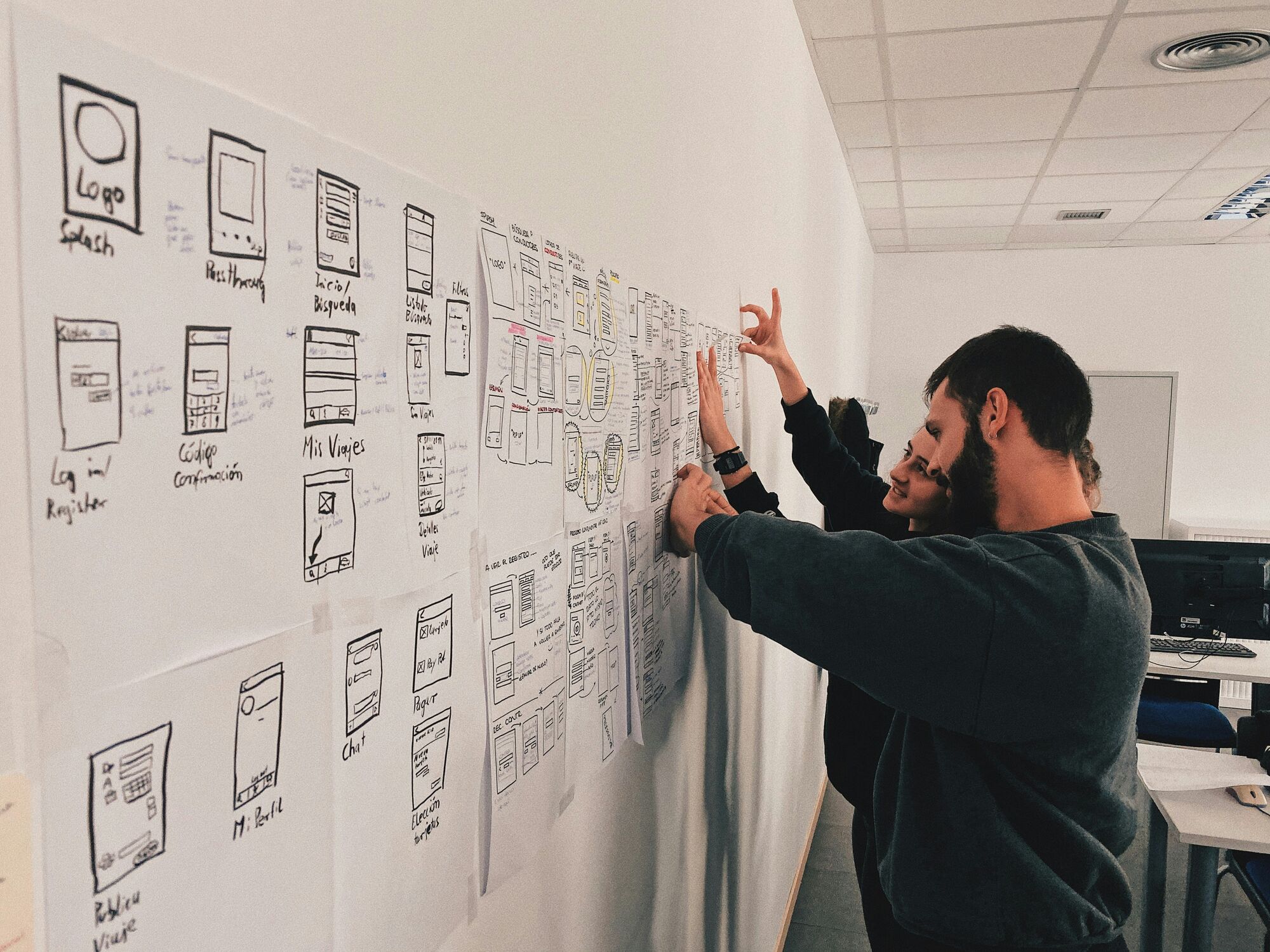
A designer pins paper wireframes of app screens along an office wall.

Custom software development company in South Africa

Arke Technologies (Pty) Ltd is a custom software development company in Johannesburg. We design, build, integrate and support web applications, mobile apps and cloud platforms for mid-sized and large organisations, public-sector bodies and schools across South Africa, with written scope, POPIA-aware design and a monthly service review after launch.

What a software development company does

Software development, or computer software development in the older phrase, is the work of turning a business process into dependable software: understanding the process, designing the data and the screens, writing and testing the code, releasing it and keeping it running. A software development company does all of that under contract, and stays accountable for the result after launch rather than handing over a folder of code. Whether you call it a software house, an app making company or an IT software development company, that accountability is what you are buying.

Custom software (also called custom developed software, or bespoke software) is built for one organisation's way of working. It makes sense when off-the-shelf products force your people to work around them, when a process is what sets you apart, or when several systems need to behave as one. It does not make sense when mature off-the-shelf solutions already do the job. Then configuring one of them is cheaper and less risky, and we will say so.

In information technology and software development terms, most of our work takes one of four shapes: a new application (a staff portal, a field app, a client-facing platform), a database application that replaces spreadsheets and email, integration between the systems you already run, and modernisation of software that has become hard to change. Corporate software development adds one requirement to all four: evidence that an audit committee can review, not only working code.

A developer smiles from his desk, a laptop open in front of him.

Build, buy or configure: choosing the right route

Before anyone writes code, decide which route fits. This table is the conversation we have in discovery.

RouteWhat it meansSuitsWatch for
Buy off the shelfSubscribe to an existing product, often SaaSStandard processes: payroll, accounting, emailWorkarounds that pile up; data you cannot export
Configure a platformExtend Microsoft 365, SharePoint, an ERP or a CRMProcesses close to the platform's designPer-user licence costs; limits on customisation
Custom buildSoftware written for your process and owned by youProcesses that set you apart, or that no product coversScope creep; key-person risk; support after launch
HybridBuy the standard parts, build the gaps, integrate the lotMost mid-sized and large organisationsIntegration quality decides the outcome

When configuration is the answer, our business software team deploys and manages the platform. When the gap sits between systems rather than inside one, start with systems integration.

A small team works through a flow on a whiteboard in a studio office.

Software development services we provide

One team designs, builds, secures and supports the software, so you have one contract and one accountable lead.

Software our team has delivered

We would rather show working systems than a capability deck. Our team designed and built each of these.

  • ISOcore

    An ISO management system platform for ISO 9001, 14001 and 45001: documentation, non-conformances, corrective actions and audit scheduling.

  • ESGnet

    ESG data collection and reporting aligned to GRI and SASB, for sustainability officers and investor reporting.

  • Server Hub

    The commerce and quoting platform behind our hardware division: a catalogue of more than 26,000 products, quotes backed by dated sources, PayFast and Yoco payments, AI-assisted sourcing and a customer assistant.

Atlas OS gives us visibility across 89 entities that we simply did not have before. The compliance tracking alone has saved us significant time every month.

Evolv AccountantsAtlasOS client, South Africa

We also build our own IT operations platform, Hesper, which launches in November 2026.

How we deliver custom software

Every project follows the same path, and you approve each stage before the next begins.

  1. Discovery

    We map the process, the people who use it, the data it touches and the systems around it, and write down the requirements, the risks and what success looks like. You receive a scoped proposal.

  2. Architecture before code

    We design the data model, the API contracts and the system boundaries first. Decisions made here shape everything after them, so you see them in writing.

  3. Build in short iterations

    Working software reaches your team early and often, so feedback lands while it is still cheap to act on.

  4. Test and secure

    Automated tests, a security review against OWASP guidance and, where the risk warrants it, a penetration test that we scope, perform and retest before go-live.

  5. Launch and handover

    Release to production, documentation of what we built and why, and training for your staff, on site or online.

  6. Support and improve

    After launch the application is supported under a service-level agreement, with a monthly service review and report.

We run our own platforms in production, so we build client systems the way we build ours: database migrations are numbered, versioned and additive by default, and every release is tested against what already works before it ships.

Hire software developers, use freelancers or appoint a development company

Most organisations weigh three ways to get software built. The right one depends on how long the system must live and who will maintain it.

OptionStrengthsRisksSuits
Hire software developers in-houseDeep knowledge of your business; full-time focusRecruitment time; one or two people rarely cover architecture, security, testing and operations; key-person riskA steady, long-term product roadmap
Freelance software developersFlexible and quick to start on small jobsContinuity when the person moves on; documentation gaps; limited accountabilityShort, well-defined pieces of work
A software development company or agencyA team with the full set of skills; a contract, an SLA and continuityNeeds a clear scope and an engaged sponsor on your sideNew systems, modernisation, integration and regulated work

Co-development works well too: our team and your developers share one codebase, one backlog and one set of standards, and we hand over as your team grows. A graduate software developer, or a junior who has completed software development training online, can grow into ownership that way, with senior review on every change.

Languages, methods and toolkits, in plain terms

Buyers meet these terms in proposals. Here is what they mean and how we use them.

  • Software development languages. The list that matters for business systems: TypeScript and JavaScript for web front ends and Node.js services, Python for data and AI work, SQL for PostgreSQL databases, Dart for Flutter, Swift for iOS and Kotlin for Android software development. Java and C# are common in the enterprise systems that business software often has to connect to. The best language to learn, or to build in, is the one your future maintainers can hire for.
  • Software development kit (SDK). Definition: a software development kit, or toolkit, is a packaged set of libraries, tools and documentation for building on one platform. The Java software development kit (the JDK), the Android SDK and the AWS SDK are common examples. A kit shortens the build but ties you to that platform's release cycle.
  • The V-model. A sequential method that pairs every design stage with a matching test stage, so requirements trace to test evidence. Useful where auditors want that trail.
  • Agile and XP. Iterative methods. Extreme Programming (XP) adds pair programming, test-first development and small, frequent releases.
  • Design patterns. Software design patterns are proven, named answers to recurring problems, and they make code predictable for the next developer.
  • MVP. A minimum viable product is the smallest release that tests whether an idea works with real users. MVP software development suits new products; it rarely suits replacing a system people depend on every day.
  • Green software development. Efficient code and right-sized cloud resources use less energy and cost less to run each month.

Our own method borrows from each: traceable requirements and test evidence from the V-model, and short release cycles from agile practice.

Governance, compliance and security

Software that handles personal information or public money must stand up to audit. We build the evidence in from the first week.

  • Governance and reporting. A named delivery lead, a risk and issue log, written change control and status reports to your sponsor at an agreed cadence. After launch, a monthly service review and report.
  • POPIA. Privacy by design: data minimisation, encryption in transit and at rest, role-based access, audit logging and retention rules, so your Information Officer can answer for the system. See our POPIA compliance checklist.
  • King IV. Principle 12 makes the board accountable for technology and information governance; our documentation, decision records and reporting give it something to govern with. Read King IV and technology governance.
  • PFMA and MFMA. For departments, public entities and municipalities, we work to their procurement and reporting disciplines and keep audit-ready documentation. See IT services for the public sector.
  • Security. Controls aligned with ISO/IEC 27001 and OWASP guidance for web and mobile applications, secrets kept out of code, and penetration testing before go-live. More in cybersecurity services and IT governance, risk and compliance.

Buying from Arke: procurement and continuity

Arke Technologies is a Level 1 B-BBEE contributor (sworn affidavit available on request), which gives buyers 135% procurement recognition. Company documents, a bank confirmation letter, our CSD supplier number and SARS tax compliance status are available on request, and we complete standard bidding documents when a bid requires them. You can buy through a proposal and purchase order, a support SLA or a formal tender response. Procurement teams can start with our company facts and supplier compliance for the public sector.

Continuity is written in, not promised. You own your data, credentials, code and documentation. We document every system so that a team other than its original authors can maintain it. If you move the work in-house or elsewhere, we hand over the code, the environments and the runbooks in an orderly exit. Once live, the application can be supported alongside your devices, servers and network infrastructure under one managed IT services contract.

Two developers lean in to review code on a laptop in a busy office.

What custom software costs, and what drives the price

Last reviewed: September 2026.

A credible quote for custom software development names each of the factors that drive the price:

  • Scope. The number of user roles, screens, workflows and reports.
  • Integrations. Each connection to an ERP, CRM, payment gateway or government interface adds design and testing work.
  • Data. Migrating and cleaning records from old systems is the most commonly underestimated line.
  • Compliance and security. POPIA controls, audit trails and a penetration test add cost and remove risk.
  • Platforms. Web only, or web plus iOS and Android.
  • Support. The service level you need after launch, priced separately from the build.

We do not publish rates. We quote each project in writing after discovery, broken into phases so you approve spend stage by stage, and support after launch is priced under its own SLA. For the detail, read app and software development cost in South Africa.

Based in Johannesburg, building for South African organisations

Our head office is at Stoneridge Office Park in Greenstone Hill, Johannesburg. Delivery is remote-first, so we work with organisations in Johannesburg, Pretoria, Cape Town and Durban on the same terms, and meet in person where the work needs it. If you are comparing software development companies in Cape Town, South African software developers in Gauteng or software companies in South Africa more widely, ask each the same three questions: who owns the code, who supports it, and what happens when a key person leaves.

A delivery team plans at a whiteboard in a bright meeting room, a laptop open on the table.

Frequently asked questions

Which company is best for software development in South Africa? Show answer

The best software development company for you is one that can show working systems like yours, names who will build and support them, and puts ownership, security and exit terms in writing. A list of the top 10 software development companies in South Africa is a starting point, not a verdict on fit. Ask each firm for a reference system, its security practice and its handover terms.

How much does custom software development cost in 2026? Show answer

The cost depends on scope, integrations, data migration, compliance and the platforms you need, so an honest figure follows discovery rather than preceding it. A single-purpose internal tool and a multi-tenant platform sit in very different brackets. We quote each project in writing, in phases, after discovery, and price support after launch separately under an SLA.

How much do software developers earn in South Africa? Show answer

Software developers' pay in South Africa varies with seniority, language and sector, and senior developers with cloud and security skills earn far more than graduates. For a buyer, salary is only part of the cost: recruitment, tooling, management and cover for leave and resignations add to it, which is why many organisations pair a small in-house team with a development company.

What is the difference between a software engineer and a software developer? Show answer

In practice the titles overlap. A software engineer usually works at the level of the whole system (architecture, reliability, scale and trade-offs), while a software developer focuses on building and maintaining features within it. Dependable delivery needs both skill sets, which is why our process gives architecture its own stage before any feature work begins.

Can I build my own software? Show answer

Yes, for simple needs. No-code and low-code tools, spreadsheets and platforms such as Microsoft 365 let non-developers make useful tools. The limits show when the software handles personal information, money, many users or integrations. Then security, testing, POPIA controls and support matter more than speed of building, and a development team earns its cost.

What is the 40/20/40 rule in software engineering? Show answer

It is a rule of thumb that splits effort roughly into 40% planning and design, 20% coding and 40% testing and integration. The exact numbers vary from project to project, but the point holds: writing code is the smaller part of delivering dependable software. Our discovery, architecture and testing stages are sized with that in mind.

Who owns the source code and the data? Show answer

You own your data, credentials, code and documentation, and at exit the code, environments and runbooks are handed over to you, so you are never tied to us by default.

Discuss your software project

Send us a short brief on what you need built, fixed or connected, call 010 447 2445 or email info@arketechnologies.com. We aim to respond to new enquiries within one business day, and we will tell you plainly whether custom software is the right answer.