
010 447 2445Contact
Arke Technologies home
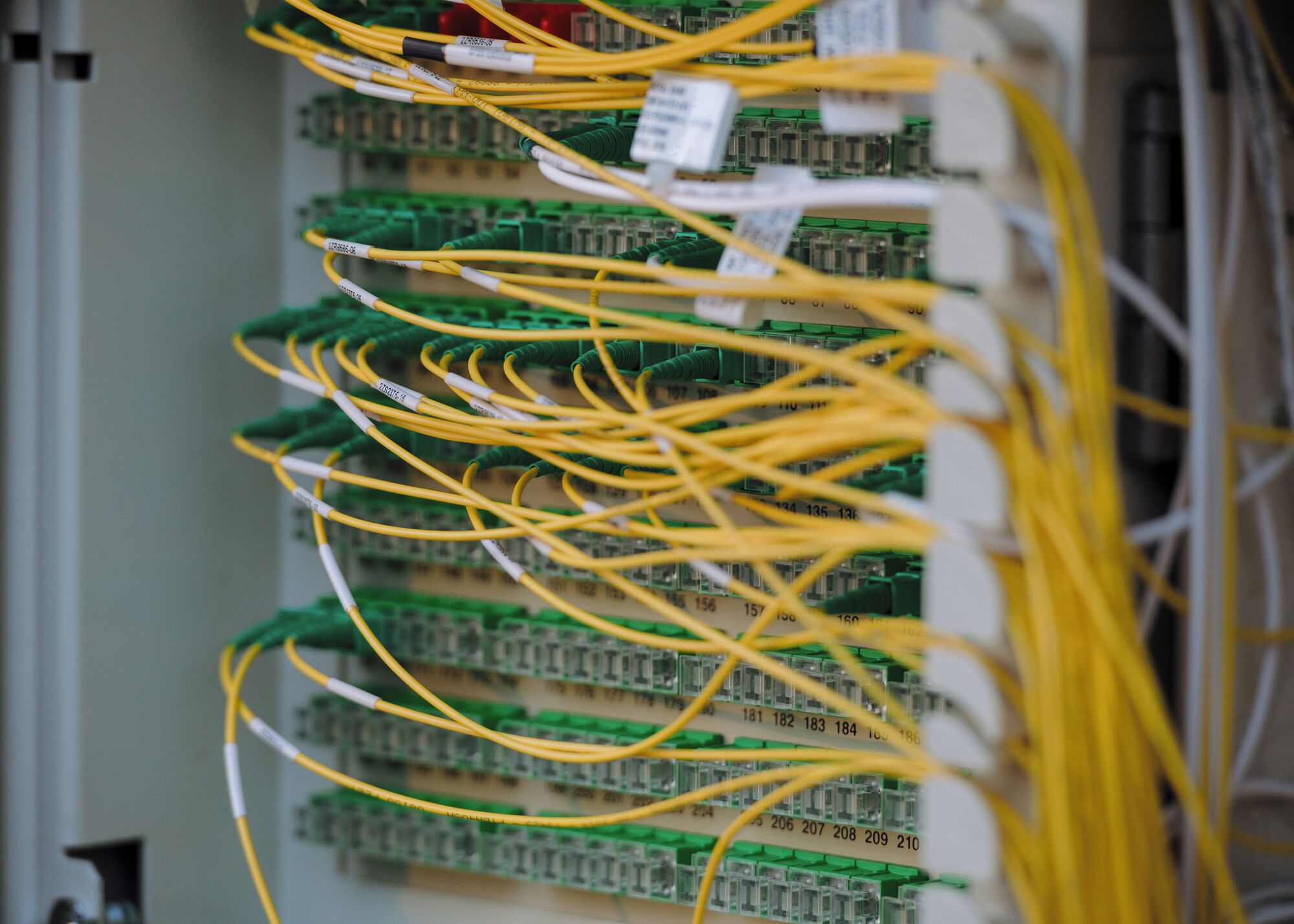
Yellow fibre patch leads fanned into a fibre distribution frame.

Business fibre vs home fibre: what is the difference?

Last reviewed: September 2026

Business fibre is a fibre internet service built for organisations, usually with lower contention, a service-level agreement with priority fault repair, static IP addresses and business support; home fibre is sold on price with best-effort service. This guide compares business fibre vs home fibre. Arke Technologies connects organisations through Fibre Boyz, its connectivity division.

Insights

Business fibre vs home fibre: what is the difference?

Last reviewed: September 2026, 12 min read

Business fibre is a fibre internet service built for organisations, usually with lower contention, a service-level agreement with priority fault repair, static IP addresses and business support; home fibre is sold on price with best-effort service. This guide compares business fibre vs home fibre. Arke Technologies connects organisations through Fibre Boyz, its connectivity division.

What is business fibre?

What is business fibre? It is an internet connection delivered over a fibre-optic line to a business premises, sold with commitments that a home service does not carry: how quickly faults are repaired, how much the capacity is shared, which IP addresses you get and who answers when something goes wrong. Fibre to the business (FTTB) and fibre to the home (FTTH) often run through the same streets, and the differences lie less in the glass than in how the service is built, sold and supported.

Much of South Africa's fibre is open access: a fibre network operator builds and owns the fibre in the street, and internet service providers sell services over it, so the same network can carry home and business products from several providers. That is why two offices on one street can have very different experiences of the same fibre.

Business services come in two broad families:

  • Business broadband fibre. Shared capacity, like home fibre, but usually with lower contention, a written service-level agreement, faster fault handling, static IP addresses and business support hours.
  • Dedicated business fibre. Capacity reserved for you, often called dedicated internet access or an uncontended line: symmetrical speeds, the tightest service-level agreement and a higher price. It suits head offices, data rooms and any site where the connection is critical.

This guide is part of our insights on IT and connectivity.
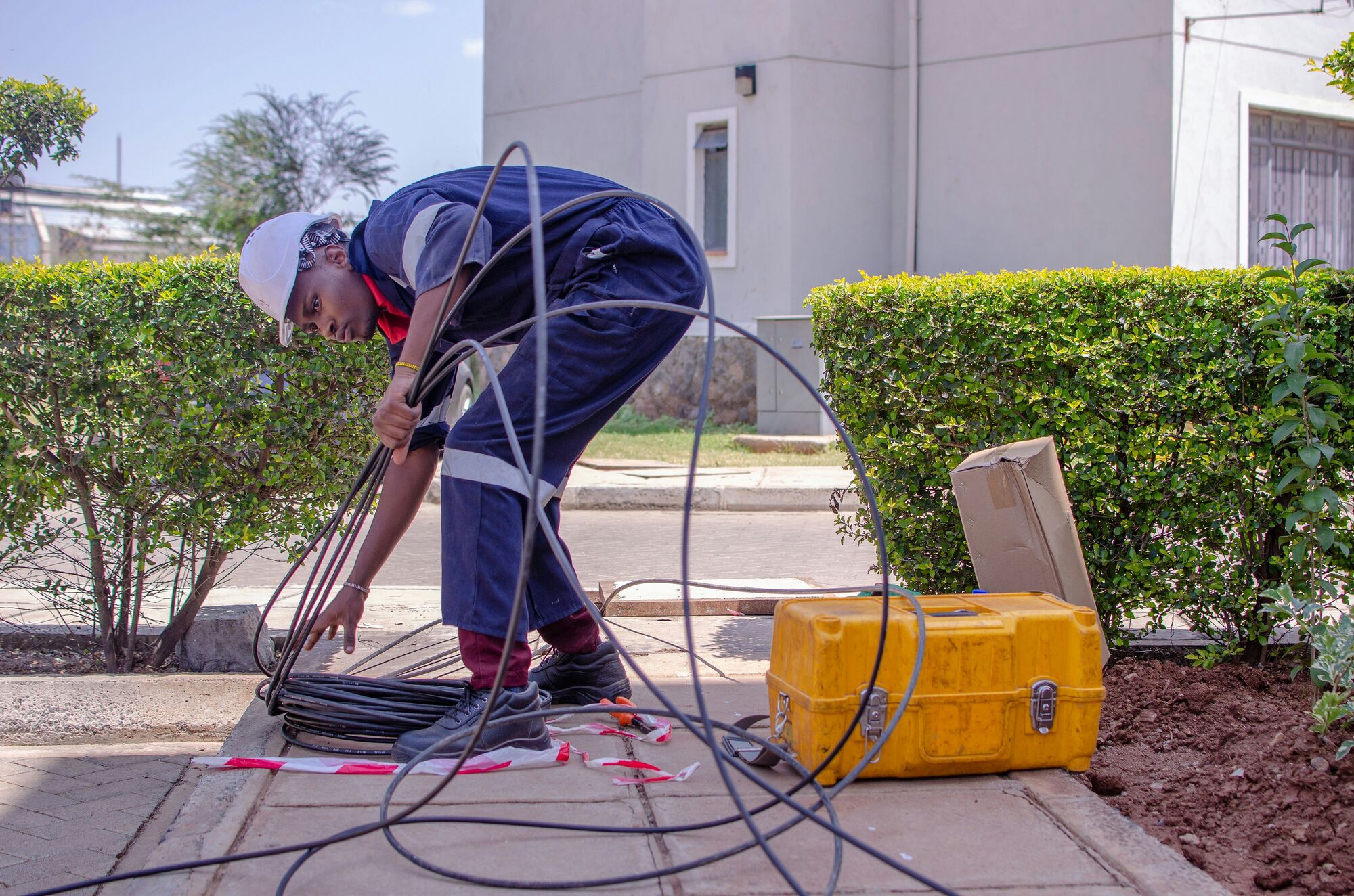
A technician lays cable from a pit beside a pavement, a test case open beside him.

Business fibre vs home fibre: side by side

Home fibreBusiness broadband fibreDedicated business fibre
Sharing (contention)Shared with many users; speeds can dip at busy timesShared, usually among fewer users, with business priorityUncontended: the capacity is reserved for you
Upload and downloadOften asymmetric, with upload lower than downloadOften symmetricalSymmetrical
Service-level agreementBest effortA written SLA with restoration targetsA stricter SLA, often with service credits
Fault handlingQueued with residential faultsBusiness priorityHighest priority, often with proactive monitoring
IP addressesDynamic, sometimes shared through carrier-grade NATA static IP address availableStatic IP address ranges
SupportCall-centre hoursBusiness hours or extendedAccount management and escalation paths
ContractOften month to monthOften 12 to 36 monthsOften 12 to 36 months or longer
InstallationA standard home connectionSometimes a site surveyA site survey, and sometimes new fibre built to the building
PriceLowestHigherHighest

The question to ask is not which is faster on paper, but what an outage or a slow afternoon costs you. A home line that is down for a day inconveniences a household; a branch, a clinic, a school office or a municipal pay point that loses its connection stops working.

Uncapped, unshaped and unthrottled fibre: what the terms mean

Fibre adverts lean on three words, and each has a precise meaning:

  • Uncapped. There is no monthly data limit, so you are not cut off or charged extra for using more.
  • Unshaped. The provider does not slow particular kinds of traffic, such as video streaming, large downloads or file sharing, to favour others.
  • Unthrottled. The provider does not reduce your speed after you pass a usage threshold during the month.

Uncapped unshaped unthrottled fibre is a common promise in fibre adverts, but read the fair use policy behind it: that document can still limit how an "uncapped" service behaves. Two more terms matter as much. The contention ratio says how many users share the capacity, and a lower ratio means more consistent speeds. The advertised speed is the line rate, the most the line can carry, not a commitment; business agreements are where a provider commits to what you will actually get.

For a household, uncapped unshaped fibre on a good network is usually enough. For an organisation, uncapped unthrottled fibre answers only part of the question, because a line with no data limit and no service-level agreement can still leave you offline for longer than the business can afford.

Business vs home internet: when a home package is enough, and when it is not

A home package can be enough for:

  • one or two people working from home in cloud applications;
  • work that can pause for a few hours, with a mobile hotspot as a stopgap;
  • a site where nobody outside the building needs to reach anything on the network.

Choose business internet when:

  • a team, a reception desk or a contact centre depends on the line all day;
  • you run VoIP, video meetings throughout the day, or cloud backups that upload large volumes; see VoIP for business;
  • anything must be reachable from outside, such as a VPN, a server, a camera system or a portal, which needs a static IP address;
  • the site is a branch linked to head office or to other sites;
  • an outage has a cost you can name: lost sales, missed appointments, learners offline or a municipal counter closed;
  • a contract, an auditor or an insurer expects documented service levels.

If you are weighing a home product for business use, check that its terms allow business use and the services you need, such as hosting or a VPN.

Why business fibre costs more

Last reviewed: September 2026

Business fibre costs more because the provider commits more to it. The main drivers of the price:

  • Contention and capacity. Sharing a line among fewer users, or reserving it for you, costs the provider more.
  • The service-level agreement. Restoration targets mean technicians, spares and escalation paths on standby.
  • Symmetry. Upload capacity equal to download is a premium on many networks.
  • Static IP addresses and monitoring. Often included in business products and not in home ones.
  • Building the line. Where fibre does not yet reach your building, new fibre may need to be built to it, which can mean a once-off charge and a longer lead time.
  • Contract term. Longer terms usually lower the monthly price, and cancellation terms differ.

We do not publish connectivity prices here, because they depend on your address, the network that serves it and the service level you choose. Fibre Boyz quotes for your premises.

One fibre line is one point of failure

However good the service-level agreement, a single line can be cut by roadworks, fail with a faulty terminal or go down when power fails. Critical sites need a plan for that:

  • A second link. An LTE or 5G link on a different network, or a second fibre line from a different network and route, so that one fault does not take out both.
  • Automatic failover. A firewall that switches between links, or SD-WAN across several sites; see what SD-WAN is and when you need it.
  • Backup power. The fibre terminal, router, firewall and switches on a UPS sized for the outages you expect. The network's own equipment also needs power, and some areas can lose service during extended load-shedding even when your equipment stays on, which is another reason for a second link on a different technology.
  • Security at the edge. Every connection into the building needs a managed firewall; see firewalls and network security.

How much speed does an organisation need?

  1. Count the people and what they do

    Video meetings, cloud applications and large files each draw differently.

  2. Add the systems

    Phones, cameras, cloud backups, software updates and anything that syncs overnight.

  3. Look at upload separately

    Cloud backups, video meetings and remote access to on-site servers all depend on upload capacity, which is where home products are thinnest.

  4. Measure before you buy

    Your current line's usage at peak times is better evidence than a rule of thumb.

  5. Leave room for growth

    Allow for more people and more cloud services over the contract term.

  6. Check the Wi-Fi

    A fast line feels slow behind weak or crowded Wi-Fi, so plan business Wi-Fi with the line.

How to choose a business fibre provider

  • Coverage. Which networks reach your building, and whether new fibre must be built.
  • The service-level agreement in writing. Restoration targets, service credits, how faults are logged and escalated, and support hours.
  • Contention and symmetry, stated in the contract rather than implied in an advert.
  • The fair use policy behind any "uncapped" promise.
  • Static IP addresses, and who holds the router and firewall credentials.
  • A backup option on a different network or technology, with failover.
  • Contract term, notice period and cancellation costs.
  • One bill and one number for support, rather than a network operator, an ISP and an IT company pointing at each other.
  • Industry standing, such as membership of the Internet Service Providers' Association of South Africa (ISPA) and its Code of Conduct.

For the wider choice of technology supplier, see how to choose an IT company in South Africa.

How Arke Technologies and Fibre Boyz deliver business fibre

Arke Technologies has connected homes and businesses since 2017, when it began trading as Fibre Boyz, an internet service provider; Fibre Boyz is now its connectivity division. Fibre Boyz provides uncapped fibre and fixed LTE, connected, billed and supported by us: we set up the router, confirm the service and take over billing and support, so you have one bill and one number to call. Arke Technologies is a member of ISPA and is bound by its Code of Conduct.

For organisations we support, business fibre and LTE can be bundled into the support contract, so one supplier carries the whole stack, from the line and the firewall to the Wi-Fi and the laptops. See business connectivity for the service, and check what is available at your address at fibreboyz.co.za  (opens fibreboyz.co.za).

Governance, compliance and procurement

  • Governance. Connectivity faults are logged and tracked like any other incident, prioritised from P1, a critical outage, to P4, a low-impact request, with targets agreed in your SLA, and reported in the monthly service review.
  • Compliance. Firewalled, monitored connections support POPIA's requirement (section 19) for reasonable technical measures to protect personal information, and public bodies get documentation that suits PFMA and MFMA audits.
  • Procurement. Arke Technologies (Pty) Ltd is a Level 1 B-BBEE contributor (sworn affidavit available on request), giving buyers 135% procurement recognition. Company documents, our CSD supplier number and SARS tax compliance status are available on request. You can buy on a written proposal and SLA against your purchase order, or through a tender, for which we complete the standard bidding documents (SBD forms).
  • Continuity. Router and firewall credentials, IP address records and network documentation are yours.

Get our guides by email

Plain, sourced guides for the people who decide on and buy technology, sent to your inbox.

Topics (optional)

Leave these clear to receive everything.

By signing up, you agree that Arke Technologies (Pty) Ltd may email you guides and updates. Every email includes an unsubscribe link. Read our privacy notice.

Frequently asked questions

What is business fibre? Show answer

Business fibre is a fibre-optic internet service designed for organisations. Compared with home fibre, it usually adds a written service-level agreement with priority fault repair, lower or no contention, symmetrical speeds, static IP addresses and business support. It comes as shared business broadband or as a dedicated, uncontended line, depending on how critical the connection is.

What is the difference between home fibre and business fibre? Show answer

The difference lies mostly in the service rather than the glass. Home fibre is shared among many users, often asymmetric and supported on a best-effort basis. Business fibre usually commits to restoration targets in a service-level agreement, shares capacity among fewer users or none, offers static IP addresses and symmetrical speeds, and comes with business support and escalation.

Can I use home fibre for my business? Show answer

You can for a home office or a very small team that works in cloud applications and can live with the occasional outage, provided the product's terms allow business use. Once calls, customers, several staff or remote access depend on the line, business fibre with a service-level agreement, and a backup link on a different network, is the safer choice.

Why is business fibre so expensive? Show answer

Business fibre costs more because the provider commits more to it. Capacity is shared among fewer users or reserved for you, faults are repaired to written targets, which keeps technicians and spares on standby, static IP addresses and monitoring are included, and a new line may need fibre built to your building. You are paying for predictability as well as speed.

What does uncapped, unshaped and unthrottled fibre mean? Show answer

Uncapped means there is no monthly data limit, unshaped means the provider does not slow particular kinds of traffic such as streaming or large downloads, and unthrottled means your speed is not cut after you pass a usage threshold. All three can still be limited by a fair use policy, so read it before you rely on the words in an advert.

Is fibre faster than Wi-Fi? Show answer

They are different things, so the real question is which one limits you. Fibre is the connection into your building; Wi-Fi carries the signal from the router to your devices. A fast fibre line can feel slow if the Wi-Fi is weak, crowded or badly placed, so a site with many users needs Wi-Fi designed for its layout as well as a good line.

Which business fibre provider is the best? Show answer

The best business fibre provider is the one that serves your address well and commits in writing to what matters to you: restoration targets, contention, support hours, static IP addresses and a backup option. Ask for the service-level agreement and the fair use policy before you sign, and check how faults are logged, escalated and reported.

Check what your office can get

Tell us about your sites and how you use the connection, and we will recommend the right line, a backup and the network behind them, or check coverage yourself at fibreboyz.co.za  (opens fibreboyz.co.za).