010 447 2445Contact
Arke Technologies home
An engineer works on a bundle of blue network cables at a rack with a handheld tool.

Firewalls, web app firewalls and network security, managed to an SLA

Arke Technologies designs, installs and manages firewalls for South African organisations, public bodies and schools: the right firewall at every site, a web app firewall in front of your websites and portals, and the monitoring, change control and POPIA evidence that keep network security accountable, from Johannesburg.

What is a firewall, and what does a firewall do?

A firewall is a device or software that inspects network traffic and allows or blocks it according to rules you set. That is the computer definition in one line. The name comes from buildings and vehicles: a firewall is the fire-resistant barrier between two spaces or, in a car, between the engine and the cabin. A network firewall does the same job for data, separating the internet from your network, and one part of your network from another.

The purpose of a firewall is to enforce your policy at the boundary. Its functions in a modern organisation:

  • Filter traffic in and out by address, port, application and user.
  • Separate zones such as staff, guests, learners, cameras, finance and servers.
  • Connect sites and people through site-to-site and remote-access VPNs.
  • Inspect for threats with intrusion prevention, web filtering and malware scanning.
  • Record who connected to what, and when, for investigations and audits.

A firewall is a type of network security control, not the whole of it. IT network security is the set of controls that protect a network and the data crossing it; it sits inside cyber security, which also covers identities, devices, applications and people. For a longer primer, read what is a firewall; firewalls sit within our network infrastructure services and wider cybersecurity services.

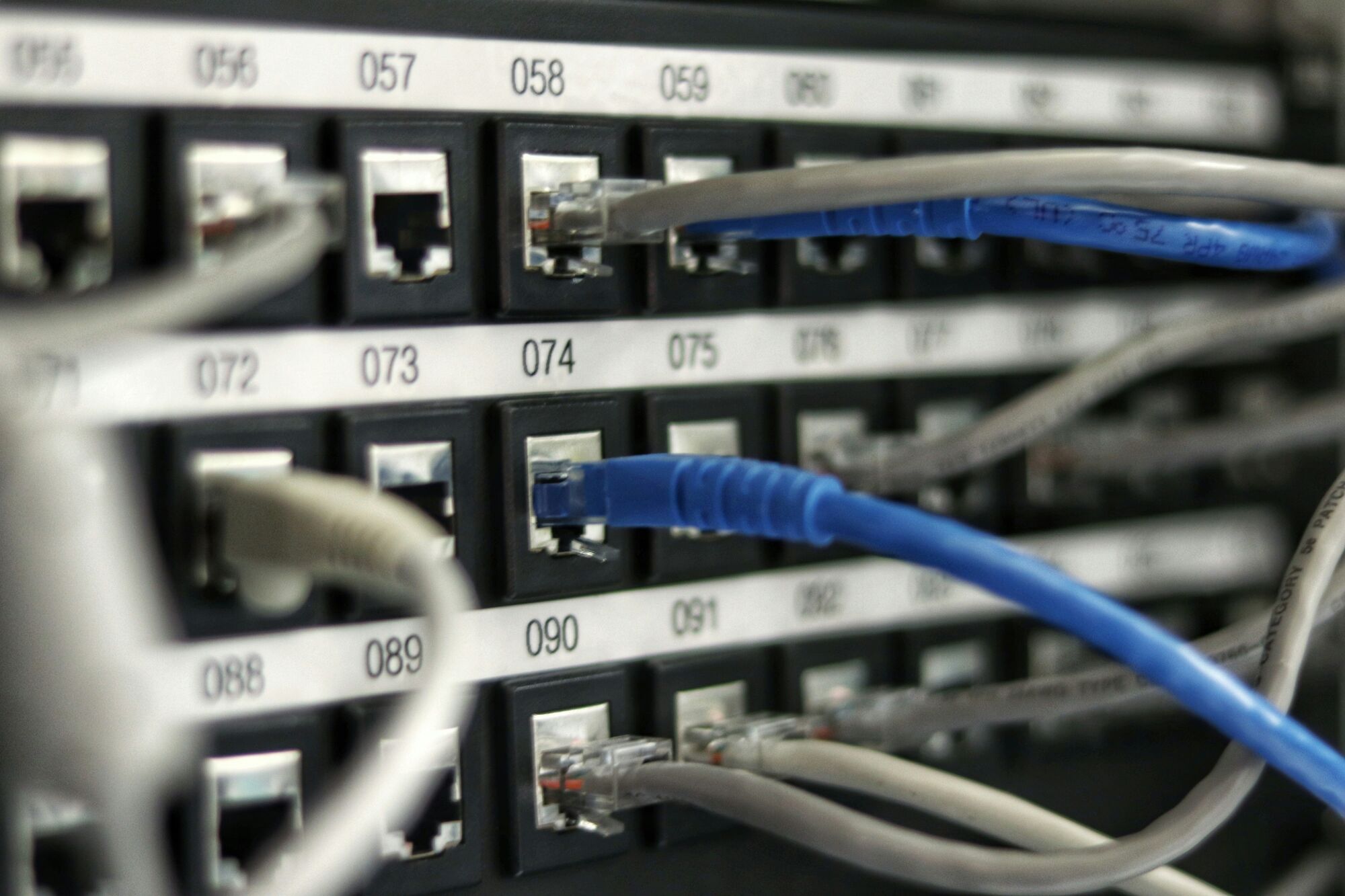
A numbered patch panel with blue and grey network leads plugged in.

Types of firewall and the firewall generations

Firewalls have evolved in generations, and each still has a place.

TypeWhat it inspectsWhere it fits
Packet filter (first generation, stateless)Each packet's addresses and ports, in isolationRouter access lists and simple edge filtering
Stateful firewall (second generation)Connections: it tracks each session and admits only the replies it expectsEvery router with firewall features and most small-office gateways
Application or proxy firewall (third generation)Traffic at the application layer, such as web and emailWeb proxies and specialised gateways
Next generation firewall (NGFW)Applications, users and content, with intrusion prevention, encrypted-traffic inspection and threat feedsThe main firewall at any site with servers, remote users or compliance duties
Web application firewall (WAF)Web requests to one website, portal or APIIn front of public web applications, in the cloud or on-premises
Host firewallTraffic to and from one computerEvery laptop, desktop and server, such as Windows Defender Firewall

Stateless vs stateful firewall is the first distinction most buyers meet. A stateless filter judges every packet alone, which is fast but easy to fool; a stateful firewall remembers the conversation, so an outsider cannot send traffic that pretends to be a reply. Every firewall we deploy is stateful at minimum.

A router with firewall features is enough for a small office on cloud applications. Dedicated firewall hardware earns its place when there is a server to protect, remote users at scale, more than one site or a compliance requirement (Server Hub, September 2026). In networking and security alike, the generation matters less than whether the firewall is configured, updated and watched.

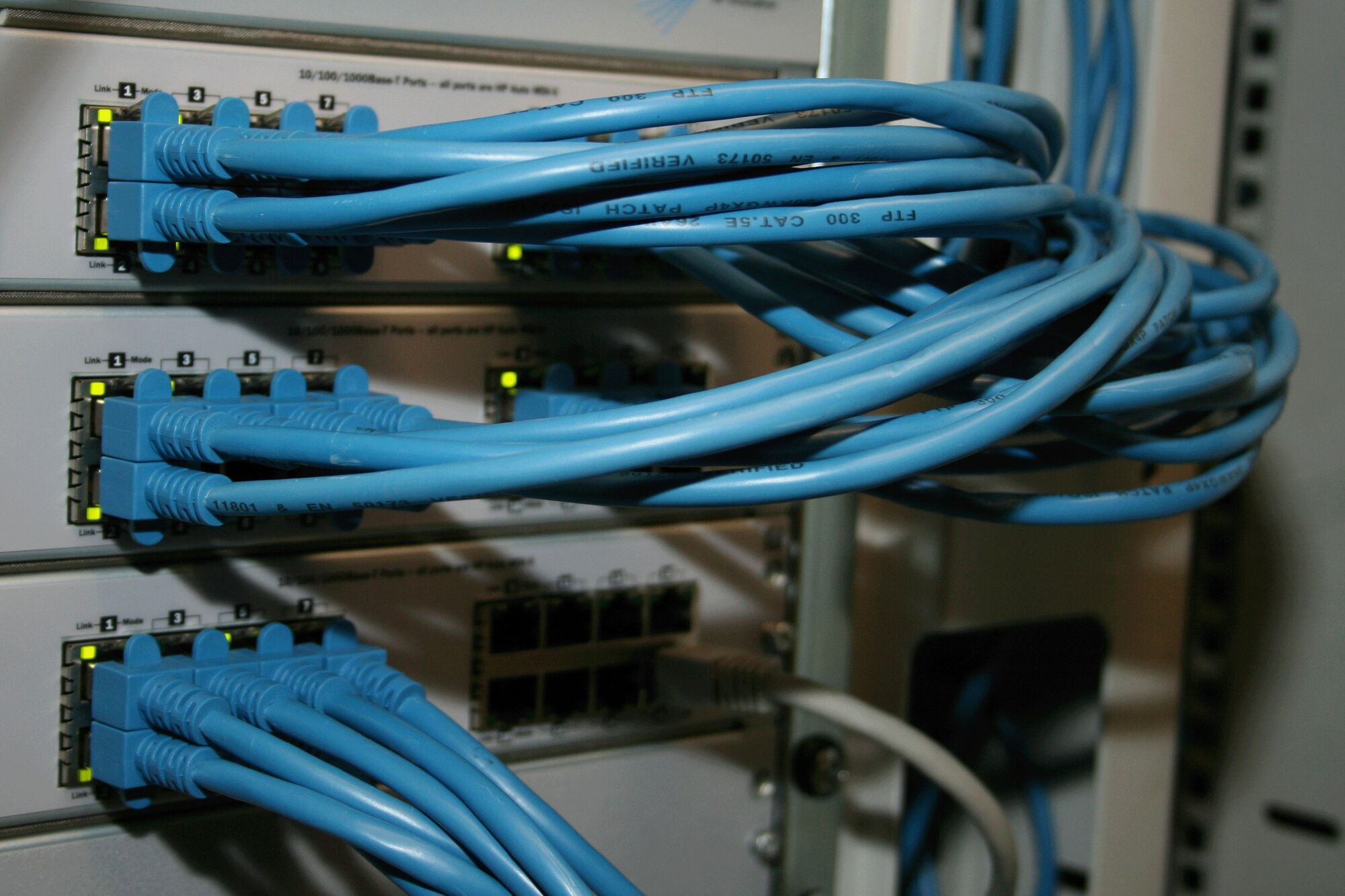
Blue patch leads run neatly into a switch in a comms cabinet.

Web app firewall (WAF): protecting websites, portals and APIs

A web application firewall (WAF) protects a website, customer portal or API by inspecting each web request before it reaches the application. A network firewall sees web traffic and lets it through; a web app firewall reads the request itself and blocks attacks such as SQL injection, cross-site scripting, credential stuffing and abusive bots, the kinds of risk the OWASP Top 10 describes.

We deploy a WAF in one of three ways:

  • Cloud WAF, such as the AWS web application firewall (AWS WAF), Azure Web Application Firewall or Google Cloud Armor, in front of applications hosted in those clouds.
  • Appliance or virtual WAF, in front of applications on your own servers or in colocation.
  • Server-level WAF, using the OWASP Core Rule Set on Apache or Nginx, for smaller sites we host and manage.

A WAF starts in detection mode and is tuned before it blocks, so legitimate users are not locked out. It also buys time: when a vulnerability is published, a WAF rule can shield the application until the code is patched. Pair it with penetration testing and sound web application development, because a WAF reduces risk but does not fix insecure code.

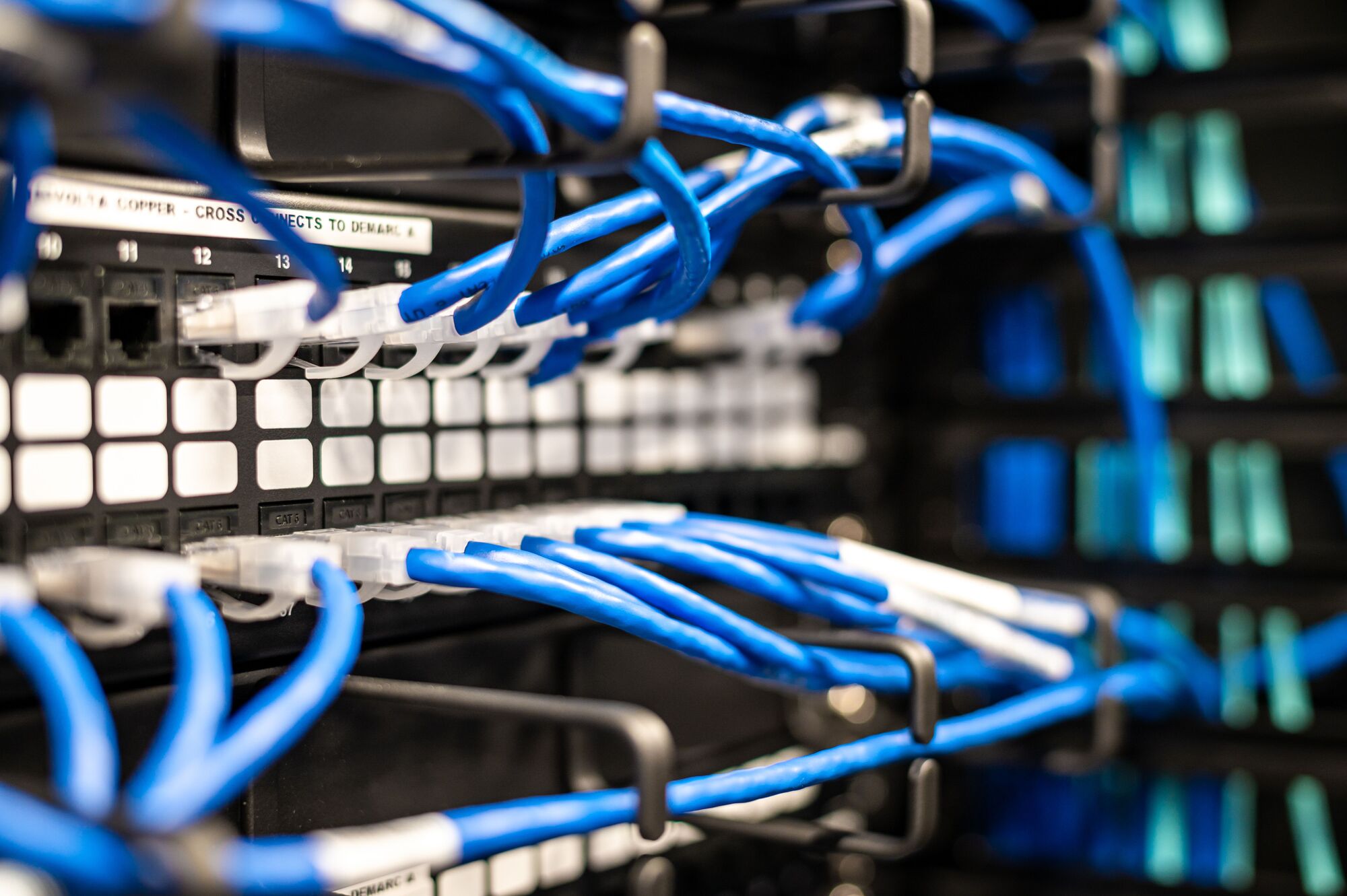
Bundles of blue network cables looped into switches in a rack.

Firewall platforms we configure

We configure firewalls from Fortinet, Sophos, Cisco, MikroTik, Ubiquiti UniFi and TP-Link Omada. This is hands-on experience, not a vendor partner status, and we recommend a platform on your requirements rather than on a sales relationship.

  • Fortinet. What is Fortinet? A network security manufacturer whose FortiGate firewalls run the FortiOS operating system. A Fortinet FortiGate combines NGFW, VPN and SD-WAN in one appliance and suits multi-site, security-led networks.
  • Sophos. Sophos Firewall is managed from Sophos Central, the same cloud console as Sophos Intercept X, the company's endpoint protection (often searched as Sophos antivirus). Sophos Connect is its remote-access VPN client, and Sophos Home is the consumer edition, not the business product.
  • Cisco. Cisco firewalls and routers are common in larger estates, and we take over, audit and manage existing Cisco firewall deployments.
  • MikroTik, Ubiquiti UniFi and TP-Link Omada. Capable gateways for smaller sites and branches where budgets are tight and the rule base is simple.

Fortinet and Sophos each run a partner portal for resellers and a support portal for customers. Whoever supplies your firewall, make sure the device, licences and support contract are registered in your organisation's name, so Fortinet support and firmware access survive a change of provider. Appliances are supplied through Server Hub, our hardware division.

Network security beyond the firewall

A firewall is one tool in the network security toolkit, and the others decide whether it works. The net effect is layered defence: an attacker who gets past one control meets the next.

  • Segmentation

    VLANs so that a compromised camera or learner laptop cannot reach finance systems or servers, with the firewall enforcing the rules between them.


  • Network access control

    Only known, compliant devices join the network, using 802.1X on switches and Wi-Fi.

  • Firewall authentication

    Rules tied to people, not just addresses: users sign in against Active Directory or Entra ID, VPN access requires multi-factor authentication, and guests pass through a captive portal.

  • Wi-Fi credentials

    One shared network security key should not protect a business network; staff Wi-Fi should use WPA2 or WPA3-Enterprise with individual sign-ins. See business Wi-Fi.
How we deliver: assess, design, deploy, manage

  1. Assess

    We review the current firewall, its rules, licences and firmware, the network diagram and the risks that matter to you, and report what we find.

  2. Design

    Zones, rules, VPNs, high availability and sizing. We size on throughput with every inspection feature switched on, not on the headline figure.

  3. Supply

    Appliances and licences through Server Hub, registered in your name, installed on sound structured cabling.

  4. Deploy

    A staged cut-over in an agreed change window, with a tested rollback. When we replace a platform, we uninstall old VPN clients from laptops, remove stale rules and revoke old certificates.

  5. Manage

    Firmware updates, licence renewals, configuration backups, rule reviews and alert handling. Faults are raised as tickets on your SLA clock and prioritised P1 (critical outage) to P4 (low-impact request), with response targets agreed in your SLA.

  6. Review

    A monthly service review and report: changes made, threats blocked, licences due and recommendations.

Governance, compliance and procurement

  • Governance and change control. Every rule change is ticketed with a requester, an approver and a reason, and the rule base is reviewed at an agreed cadence to remove what is no longer needed. Escalation paths and reporting cadence are written into the SLA.
  • Compliance. POPIA section 19 requires reasonable technical measures to protect personal information, and a managed, logged firewall is part of that evidence. King IV Principle 12 places technology and information governance with the board, and PFMA and MFMA audits expect controls and records in departments and municipalities. We work to CIS Controls, the NIST Cybersecurity Framework and ISO/IEC 27001-aligned practice; see POPIA compliance.
  • Procurement. A Level 1 B-BBEE contributor (sworn affidavit available on request), giving buyers 135% procurement recognition. Company documents, our CSD supplier number and tax compliance status are available on request, and we complete standard bidding documents when a tender requires them.
  • Continuity and exit. Administrator credentials, configuration backups, rule documentation and licences are yours. If you change provider, the handover is complete and documented.

Firewall cost: hardware, subscription and management

Last reviewed: September 2026

A firewall's cost has three parts, and the appliance is often the smallest. For a next generation firewall, the security subscription that feeds its threat intelligence typically costs as much as, or more than, the hardware over three years (Server Hub, September 2026). Server Hub's guide to firewall cost for a small business  (opens serverhub.co.za) carries current rand prices. What drives the total:

  • Throughput with inspection enabled, sized to your fibre line and user count.
  • Sites and redundancy: one appliance or a high-availability pair per site.
  • Subscription term: one, three or five years, with the renewal budgeted from day one.
  • Web app firewall licensing: per application, or by request volume for cloud WAFs.
  • Management: firewall management can sit inside a managed IT agreement priced per user per month, or be quoted separately after an assessment. Published South African managed IT rates run from about R180 to R400 per user per month (matnet.co.za, September 2026).

When you compare providers, ask for throughput with every security feature on, the renewal cost in years two and four, who reads the logs, and which engineers hold current certifications for your platform; Fortinet training and certifications, for example, are examined through Pearson VUE test centres. We hire technicians for experience, education and certifications. Treat a vendor logo on a proposal as a starting point, not evidence.

Frequently asked questions

What does a firewall do? Show answer

A firewall inspects traffic between networks and allows or blocks it according to rules. In practice it keeps the internet out of your internal network, separates zones such as staff, guests and servers, connects sites and remote users through VPNs, blocks known threats and records connections for investigation. A next generation firewall adds awareness of applications, users and content to those basics.

What is a web application firewall (WAF)? Show answer

A web application firewall is a filter in front of a website, portal or API that inspects each web request for attacks. It blocks SQL injection, cross-site scripting, bots and credential stuffing that a network firewall lets through as ordinary web traffic. It can run in the cloud, as AWS WAF does, on an appliance, or on the web server itself.

What is the difference between a stateless and a stateful firewall? Show answer

A stateless firewall checks each packet alone against its rules, while a stateful firewall tracks every connection and admits only traffic that belongs to one it expects. Stateless filtering is fast but easier to deceive with forged replies. Stateful inspection is the minimum for any organisation's internet edge, and every next generation firewall builds on it.

What is a next generation firewall (NGFW)? Show answer

A next generation firewall is a stateful firewall that also identifies applications and users, inspects encrypted traffic and blocks threats with intrusion prevention and live threat feeds. It needs an active security subscription to stay effective. Organisations with servers on site, remote users, several sites or compliance duties should use one; a small cloud-only office can manage with a business gateway.

What is a network security key, and where do I find it? Show answer

A network security key is the password for a Wi-Fi network. To find your network security key, check the label or settings page of the router, look in the hotspot settings on a phone that shares its connection, or open the properties of a network your Windows computer has already joined. In a business, staff should sign in individually rather than share one key.

Is Windows Firewall enough, or do we need a hardware firewall? Show answer

Windows Firewall is necessary but not sufficient for an organisation. It protects one computer; a hardware firewall protects the whole network, including printers, cameras and servers that cannot run a host firewall, and it enforces segmentation, VPNs and logging centrally. Use both: host firewalls on every computer, managed by policy, and a firewall device at each site's internet edge.

How much does a firewall cost? Show answer

A firewall costs the appliance, the security subscription and the management, and for a next generation firewall the subscription is usually the larger part over three years (Server Hub, September 2026). We size and quote after an assessment, show the renewal cost up front, and include management in a managed IT agreement or quote it separately.

Know what your firewall is actually doing

Start with a firewall and network security assessment: rules, licences, firmware and exposure, in a report you keep.