
010 447 2445Contact
Arke Technologies home
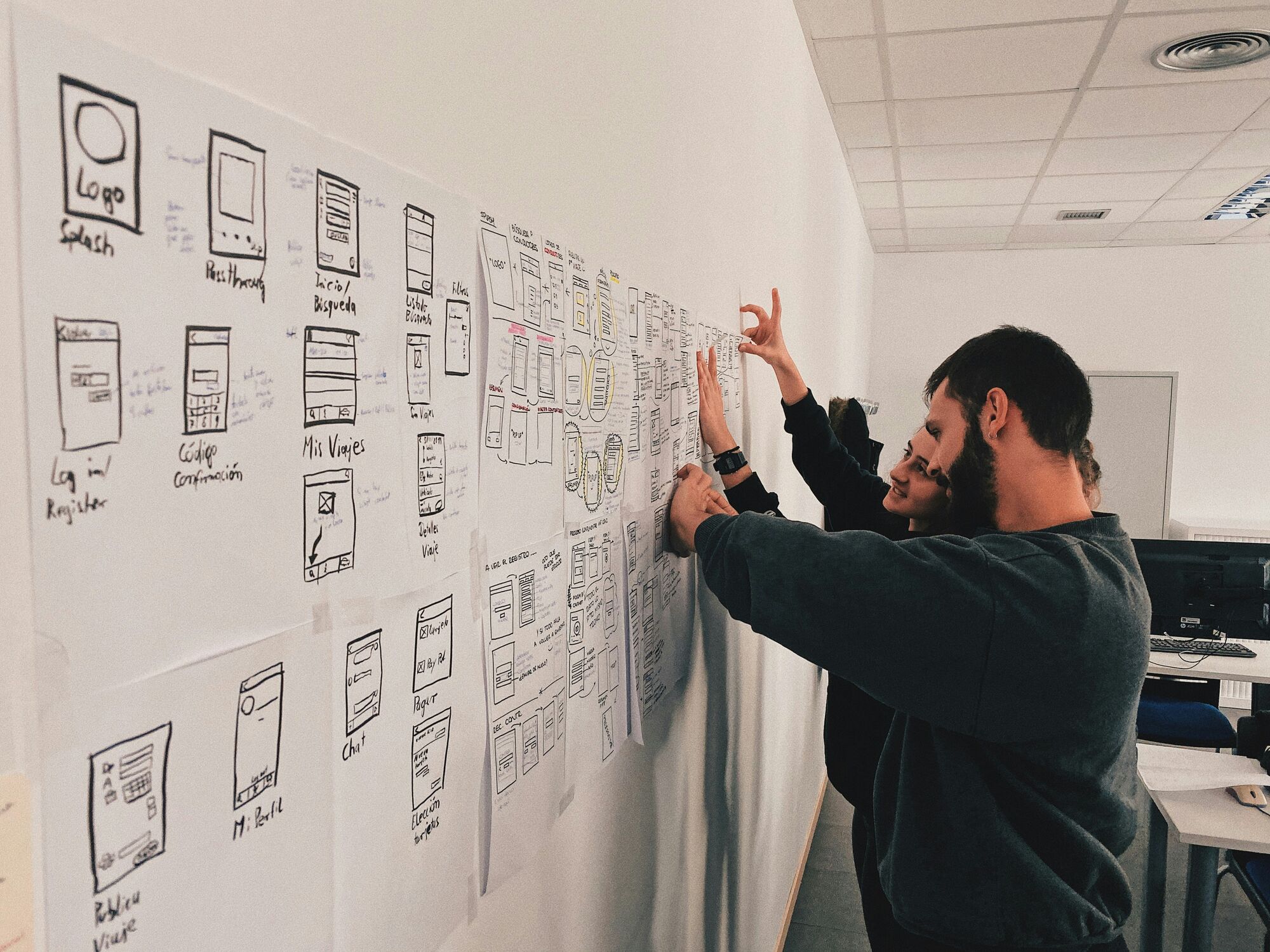
A designer pins paper wireframes of app screens along an office wall.

App development cost in South Africa: mobile apps, web applications and custom software

Last reviewed: September 2026

App development cost in South Africa depends on scope, not on a price list: the platforms, the back end, integrations, security and support after launch. This guide explains what drives the cost of mobile apps, web applications and custom software, how to compare quotes, and how Arke Technologies in Johannesburg scopes a build.

Insights

App development cost in South Africa: mobile apps, web applications and custom software

Last reviewed: September 2026, 15 min read

App development cost in South Africa depends on scope, not on a price list: the platforms, the back end, integrations, security and support after launch. This guide explains what drives the cost of mobile apps, web applications and custom software, how to compare quotes, and how Arke Technologies in Johannesburg scopes a build.

How much does app development cost? The short answer

How much app development costs is set by two things: the effort the build takes, which is the size of the team multiplied by the weeks it works, and what the app needs to keep running afterwards. That is why honest answers come as ranges tied to a scope rather than a single figure, and why two quotes for "an app" can differ widely: they rarely describe the same app. Whether you ask what it costs to build an app or to create one, the scope decides the number.

Published South African prices for app and software projects vary widely with scope. The nearest published benchmark we can cite is for IT project work in general: about R550 to R750 an hour ex VAT (matnet.co.za, September 2026). Multiply a rate by the hours a scope needs, add the running costs for three years, and you have a fair view of the cost of ownership.

We do not publish hourly or project rates. We quote each build in writing after discovery, in phases you approve one at a time. Our other cost guides cover managed IT, penetration testing and Microsoft 365 plans, and every guide is listed in our insights.

What drives mobile app development cost

Mobile app development cost follows from ten decisions, and a credible quote names each one:

  • Platforms. iOS, Android or both; a phone app only, or a web version too.
  • How it is built. One cross-platform codebase in Flutter or React Native, or separate native apps in Swift for iOS and Kotlin for Android.
  • Features and screens. Every screen, form, user role and workflow adds design, build and testing time.
  • The back end. The APIs, database, sign-in, file storage and push notifications the app relies on. This is often the larger part of the work, and it is invisible in a screenshot.
  • The admin portal. A web interface where staff manage users, content, orders and reports.
  • Integrations. Payment gateways, your ERP or CRM, maps, messaging and government systems each need building, testing and monitoring.
  • Offline working. An app that must capture data without signal needs a local database and sync logic that resolves conflicts when the connection returns.
  • Security and POPIA. Encryption, access control, audit logs, a privacy notice and consent records, and a penetration test where the risk warrants it.
  • Design and accessibility. Custom design and accessibility testing cost more than a standard component library, and repay it in adoption.
  • Support after launch. Updates, fixes and monitoring under a service agreement, priced separately from the build.

App development costs by type of app

The type of app is the quickest guide to the budget bracket, because it fixes how many apps, users and integrations are involved. The table shows how the types compare; it is not a price list.

Type of appWhat it involvesMain cost driversRelative cost
Basic appA few screens: information, bookings, forms and notificationsDesign and store releaseLowest
Business app for staffField sales, inspections, approvals or stock counts, signed in with company accountsOffline sync, ERP or CRM integration, device managementModerate
E-commerce appCatalogue, search, cart, checkout and order trackingPayment gateway, stock and price sync, promotionsModerate to high
Food delivery or on-demand app (the Uber model)Three apps in one system: customer, merchant or driver, and operationsReal-time location and dispatch, payouts, ratings, supportHigh
Banking or fintech appAccounts, payments and transfers for customersStrong authentication, fraud controls, core-system integration, regulation, independent security testingHighest
Web application or SaaS platformA browser-based system for staff, customers or citizensUsers and roles, integrations, reporting, multi-tenancyModerate to highest

Basic app development cost stays lowest because the app mostly displays content and collects simple forms, with little logic behind it. Business app development cost rises with offline working and integration: a field app that captures orders must sync them to the ERP without duplicates or losses.

Food delivery app development cost, and Uber app development cost as a benchmark, reflect a harder problem: three connected apps, live location, dispatch rules that match orders to drivers, split payments and payouts, and a support process for when deliveries go wrong. Banking app development cost sits at the top because failure is expensive: strong customer authentication, fraud monitoring, integration with core banking systems, financial-sector regulation, card-data rules where cards are involved, and independent penetration testing before launch and after major changes.

Android and iOS app development cost: native or cross-platform?

Android app development cost and iOS app development cost are broadly similar for the same features; the real difference is whether you build once or twice. Two native apps, one in Kotlin and one in Swift, mean two codebases to build, test and maintain. A cross-platform framework such as Flutter or React Native produces both apps from one codebase, which lowers the build and maintenance cost and suits most business, e-commerce and field apps. Native development earns its cost when an app depends heavily on device hardware or platform-specific features.

Testing is where platform choice meets reality: test on the range of Android handsets your users actually carry, including lower-cost models, as well as on current iPhones. Store release has costs of its own. Apple charges an annual fee for its developer programme and Google a one-off registration fee for Google Play, and both review each app before it goes live.

Website and app development cost: web applications and custom software

Website and app development cost is often best budgeted together, because a well-designed system shares one back end: the same APIs and database serve the website, the web application and the mobile app. Web application development cost, whether the web app is a customer portal or an internal system, depends on users and roles, integrations, reporting and the volume of data, much as a mobile app's does. A progressive web app, which installs from the browser without an app store, can meet some needs at lower cost, with more limited access to device features.

Custom software development cost follows the same logic at a larger scale, and how much it costs is decided in four places: the processes the software must run, the systems it must connect to, the data to migrate and the compliance it must prove. Custom software development pricing should also be tested against the alternative: configuring a platform you already license, such as Microsoft 365, an ERP or a CRM, often costs less where your processes fit the platform's design. A custom software development price is worth paying where the process is distinctive and the platform would force you to work around it. See custom software development and web application development.

App development companies, freelancers and in-house teams

App developers cost different amounts depending on who you hire, and the headline rate hides what is and is not included.

OptionWhat the price coversStrengthsRisks to manage
Freelance developerUsually the app itself, sometimes the back endLower rate; flexible for small, well-defined workOne person holds the knowledge; testing, security and support may be missing
App development companyDesign, front end, back end, testing, security, store release, documentation and supportA team with continuity, quality assurance and a support agreementHigher rate; check who owns the code and the accounts
In-house teamSalaries, recruitment, tools and managementDeep knowledge of the business; control of prioritiesThe cost of hiring and keeping scarce skills; cover for leave and resignations
HybridA small internal team, with a company for peaks and specialist skillsKeeps knowledge in-house while adding capacityNeeds clear ownership and shared standards

Freelance app developers usually cost less per hour, and their quotes usually cover less: often no testing, no documentation and no one to call when the developer moves on. App development company cost includes the team around the code. Compare the cost of app development companies on the same scope and the same deliverables, never on the hourly figure alone.

Hourly rates, fixed prices and how software developers quote

A mobile app development hourly rate tells you little until you know the hours behind it. Software developers price work in one of three ways:

  1. Fixed price per phase

    A defined scope for a set price, with changes handled through change control. It suits work that can be specified well in advance.

  2. Time and materials

    You pay for the hours used, against an estimate and a budget ceiling. It suits work whose scope will change as you learn.

  3. Retained team or support agreement

    A monthly fee for a team's capacity, or for support under an SLA once the app is live.

Quotes from software developers are only comparable when they are itemised. Ask each bidder to price discovery and design, each app and the admin portal, the back end, each integration, testing on real devices, a security review, store release, documentation and handover, and a period for fixing defects after launch. Hosting and support should appear as separate monthly lines. The quote should also state that the source code, the app store accounts and the data belong to you.

The cost after launch: hosting, updates and support

The build is the first cost, not the last. Budget every year for:

  • Hosting and services: cloud hosting on Google Cloud, AWS or Microsoft Azure, plus databases, storage, maps, email and SMS services, most of which charge by use.
  • App store accounts and commission: Apple's annual developer fee, and the stores' commission on digital goods or subscriptions sold inside the app. Physical goods and services, such as meals and deliveries, are paid through a payment gateway instead (PayFast, Yoco, Paystack or Peach Payments, for example), which charges per transaction. See payment gateway integration.
  • Operating system updates: Apple and Google release major versions every year, and the stores set rules on the platform versions apps must target, so an app needs regular updates to stay listed.
  • Security: patching libraries, renewing certificates and retesting after significant changes.
  • Support: fixes, small changes and monitoring under an SLA, with incidents prioritised from P1 to P4 and response and resolution targets agreed with you.

How to keep app development cost under control

  1. Start with discovery

    Define users, processes, integrations and risks, and turn a guess into a scoped estimate.

  2. Release a first version, then grow it

    Build the smallest version that does the core job well, put it in front of real users, and fund the next phase from evidence.

  3. Configure before you build

    Where Microsoft 365, an ERP or a CRM already does most of the job, configure it and build only the gap.

  4. Choose cross-platform where it fits, so one codebase, one test plan and one release process serve iOS and Android.

  5. Budget the running costs for at least three years, not only the build.

Risks that inflate the cost, and how we prevent them

  • Scope creep: prevented with a written scope, phase gates and change control, so every change is estimated and approved before work starts and the budget moves only when you decide.
  • Lock-in: the source code in your repository, the app store and cloud accounts in your organisation's name from the first day, and documentation delivered with every release.
  • Security flaws found late: security designed in from the start, testing against OWASP guidance, and a penetration test before launch where the risk warrants it.
  • Rework after launch: real users test early versions on real devices and real networks, including weak signal.
  • An app no one maintains: support priced and agreed before launch, not after the first fault.

How Arke Technologies scopes and quotes a build

We build web applications and platforms with Next.js, React, TypeScript, Node.js, Python and PostgreSQL, and mobile apps in Flutter, React Native, Swift and Kotlin. Work our team has delivered includes Server Hub's commerce and quoting platform, built in-house with a catalogue of more than 26,000 products and PayFast and Yoco payments.

Every build follows the same path: discovery, a written proposal with phases and deliverables, design, build and test, release, then support under an SLA with a monthly service review.

For public bodies and procurement teams, Arke Technologies (Pty) Ltd is a Level 1 B-BBEE contributor (sworn affidavit available on request); company documents, our CSD supplier number and SARS tax compliance status are available on request, and we complete standard bidding documents when a tender requires them. You own the source code, data, credentials and documentation, and we hand them over in full if you change provider. Before you compare providers, read how to choose an IT company in South Africa, and see our mobile app development service.

Get our guides by email

Plain, sourced guides for the people who decide on and buy technology, sent to your inbox.

Topics (optional)

Leave these clear to receive everything.

By signing up, you agree that Arke Technologies (Pty) Ltd may email you guides and updates. Every email includes an unsubscribe link. Read our privacy notice.

Frequently asked questions

How much does it cost to develop an app in South Africa? Show answer

The cost of developing an app in South Africa is the hours its scope needs multiplied by the developer's rate, plus hosting, updates and support after launch. Published rates for IT project work run from about R550 to R750 an hour ex VAT (matnet.co.za, September 2026). The platforms, back end, integrations, offline working and security set the hours, so a basic information app and a banking platform sit in very different brackets.

How much does it cost to pay someone to develop an app? Show answer

Paying a freelancer usually costs less upfront than hiring an app development company, but the two prices cover different work. A company quote should include design, the back end, testing, security, store release, documentation and support; a freelance quote often covers the app alone. Compare like with like, and ask who maintains the app when the developer moves on.

What is the average cost to build an app? Show answer

There is no useful average cost to build an app, because the figure mixes simple information apps with multi-sided platforms that cost many times more. A better guide is the cost of apps like yours: the same type, platforms, integrations and security needs. Use the comparison of app types above to place your project, then ask for an itemised quote against a written scope.

How much does custom software development cost in 2026? Show answer

Custom software development in 2026 is priced by the hours its scope needs: the processes it automates, the systems it connects, the data it migrates and the compliance it must prove. Published rates for IT project work in South Africa run from about R550 to R750 an hour ex VAT (matnet.co.za, September 2026). The hours depend on scope, so insist on a phased, itemised quote.

Is it cheaper to build an Android or an iOS app? Show answer

Building an Android app and an iOS app costs about the same for the same features; the saving comes from building both at once. A cross-platform framework such as Flutter or React Native produces both apps from one codebase, which lowers build and maintenance cost. Native apps suit products that depend heavily on device hardware. Either way, budget for testing across a wide range of Android handsets.

How much does an ecommerce app cost? Show answer

An ecommerce app sits in the moderate-to-high cost bracket, above a basic app, because the catalogue, checkout, payments, stock and orders must work together without error. The main drivers are the payment gateway, synchronising stock and prices with your ERP or online store, delivery tracking and promotions. A responsive web store is often the better first step, with an app added once repeat customers justify it.

How much does an app cost to maintain? Show answer

An app costs money every year after launch: hosting and cloud services, store accounts, updates for new iOS and Android versions, security patches and support. The amount depends on the number of users, the integrations and how actively the app changes. Budget for maintenance from the start and agree it in a support SLA before launch, so fixes are planned rather than paid for in emergencies.

Can ChatGPT build me an app? Show answer

AI tools such as ChatGPT can generate code, screens and prototypes quickly, but they do not deliver a production app on their own. A business app still needs architecture, a security review, testing on real devices, POPIA controls, store approval and someone accountable for maintenance. Use AI to explore an idea cheaply, and an experienced team to build what customers and staff will rely on.

Get a phased, written quote

Tell us what the app or system must do, who will use it and what it must connect to, and we will scope it, estimate it in phases and show the running costs before you commit.